
Drought and Foundation Damage in Topeka: Signs to Check
The 2022–2023 drought dried out yards across northeast Kansas, and for many homeowners in Topeka, KS it was followed by new cracks, gaps along the baseboards or doors that would not latch. Then the rain came back. If you are wondering whether a dry stretch had anything to do with what you are seeing, this guide explains how drought affects clay soils, what the record shows for Topeka and the surrounding counties, and what signs are worth a closer look.
What the drought record shows
The US Drought Monitor maps drought weekly in categories from D1 (moderate) to D4 (exceptional). For Shawnee County, the county statistics show:
- Moderate drought or worse (D1+) in 47 weekly maps across 2022 and 2023, starting in September 2022.
- Severe drought (D2) in 21 of those weeks.
- A peak of 93.5% of the county in D2 (severe) drought on October 17, 2023.
- No extreme (D3) or exceptional (D4) drought in Shawnee County.
National Weather Service drought statements show conditions in the county easing in early 2024.
Other counties around the region had it worse or about the same:
| County (town) | Worst category, 2022–23 | Peak |
|---|---|---|
| Shawnee (Topeka) | D2 severe | 93.5% of county, Oct 17, 2023 |
| Lyon (Emporia, KS) | D3 extreme | About 73% of county, Sept 19, 2023 |
| Geary (Junction City, KS) | D3 extreme | 49% of county, Sept 5, 2023 |
| Riley (Manhattan, KS) | D3 extreme | 2.5% of county, Sept 5, 2023 |
| Douglas (Lawrence, KS) | D2 severe | 100% of county, Oct 11, 2022 |
| Pottawatomie (St. Marys) | D2 severe | 90% of county, Oct 10, 2023 |
Source: US Drought Monitor county statistics, 2022–2023.
How drought affects a foundation on clay
About 46% of Shawnee County is mapped in clay soils with high or very high shrink-swell potential (USDA NRCS soil data), mainly Martin and Pawnee soils. Clay like that shrinks as it loses water. In a long dry spell, the soil around and under a house can pull back from basement walls and lose volume under footings and slabs. That can contribute to settling, especially at corners and along the side of the house that gets the most sun.
The return of rain can matter as much as the dry spell. As clay rewets, it swells again and can press harder on basement walls. Gaps that opened along the wall during the drought can also let water run straight down the outside of the foundation. That wet and dry swing is why some homeowners notice changes a season or two after a drought rather than during it.
Not every crack that shows up after a dry year is drought damage. Concrete shrinks as it cures, houses settle a little, and older walls have their own history. Check your own lot on Web Soil Survey, and read our guide to Kansas expansive clay soil for more on how the soils behave.
Signs worth a closer look after a drought
- Soil pulled away from the foundation, leaving a visible gap along the wall.
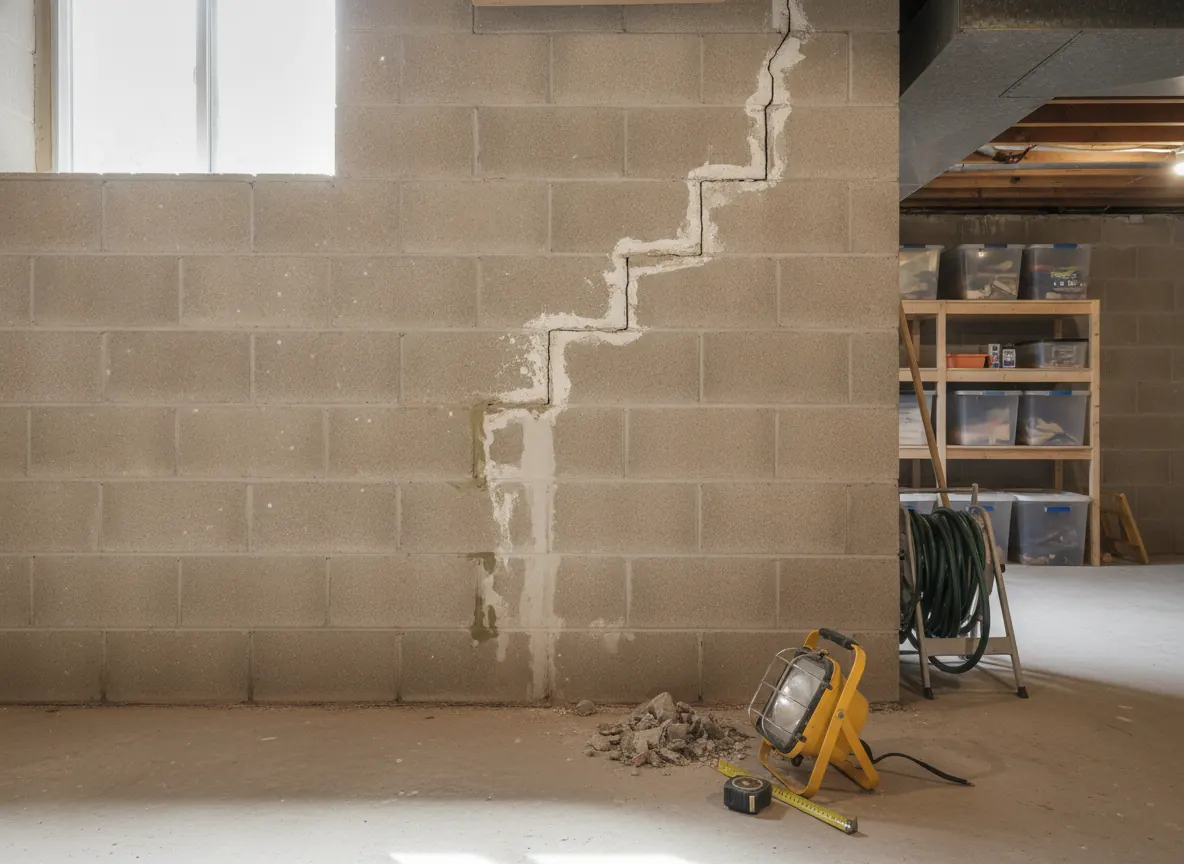
- New or widening stair-step cracks in block walls or brick.
- A horizontal crack along a basement wall, or a wall that leans in.
- Doors and windows that start sticking or will not latch.
- Gaps between the floor and baseboard, or between the wall and ceiling.
- Floors that feel sloped, or a crack across a slab that keeps getting wider.
- Water at the base of a basement wall after the first heavy rains.
Date your photos and put a pencil mark at each end of a crack. If it grows over the next few months, that trend is useful to anyone who looks at it. Our guide to basement wall crack types explains which patterns are usually cosmetic and which call for an assessment.
Engineer first for bigger signs. A bowing wall, a horizontal crack or sloping floors are worth an independent structural engineer's assessment before you pay for a large repair. This Old House puts an inspection at $300–$1,000. Pick an engineer who is independent of the company selling the repair. See foundation inspections.
What helps during and after a dry spell
The goal is steadier soil moisture around the house: not bone dry in August, not soaked in May.
- Manage roof water. Extend downspouts and keep gutters clear, so the first big storms after a drought do not pour into the gaps along the wall.
- Fix the grade. Fill the gap where soil pulled away and slope the surface away from the house. See drainage and grading.
- Consider steady watering. Some homeowners run a soaker hose a short distance from the foundation in long dry spells. Avoid soaking the wall line or creating standing water.
- Watch trees and shrubs. Large plantings close to the house draw water from the soil. Ask an arborist before removing or cutting roots of a mature tree.
When to get quotes
If cracks keep growing, a wall is bowing, or doors and floors keep shifting after soils have rewet, it is time to have local companies look. Depending on what they find, proposals may include crack repair, wall bracing or piers to stabilize settling. Typical national price ranges are in the foundation repair cost guide.
Kansas doesn't issue a state license for foundation contractors. Inside Topeka city limits, contractors must hold a City of Topeka contractor license and pull a building permit for structural work. Ask for the license, proof of liability insurance and the permit number.
Insurance is worth checking before work starts, but standard homeowners policies commonly exclude settling, earth movement and gradual damage. Sudden events like a burst pipe may be treated differently. Read your policy and ask your agent.
Common questions
Can drought cause foundation problems?
It can contribute. Clay soils shrink as they dry, which can let footings and slabs settle or open gaps along basement walls. When rain returns, the soil swells again. Not every crack after a dry year is drought damage, so date your observations and watch for changes.
How bad was the drought in Topeka?
Shawnee County peaked at D2 (severe) drought on the US Drought Monitor, with 93.5% of the county in that category on October 17, 2023. The county did not reach extreme drought. Lyon County around Emporia, KS did, at about 73% in September 2023.
Should I water my foundation during a drought?
Some homeowners use a soaker hose a short distance from the wall to keep soil moisture steadier. Avoid soaking soil against the wall or creating standing water. Ask a local company or engineer whether it makes sense for your lot.
Will cracks close when the rain comes back?
Some hairline cracks open and close with the seasons. A crack that keeps widening, a wall that bows or a floor that keeps sloping after soils rewet is worth an assessment. Measure and date cracks so you can see the trend.
Get quotes from local companies
Topeka Foundation Experts is a free quote service, not a contractor. Describe what you are seeing once and independent foundation repair, basement wall and waterproofing companies serving Topeka, KS and northeast Kansas can reply with quotes. Companies may pay to receive requests, and there is no obligation to hire anyone. Request free quotes or call (785) 502-9116.