
Kansas Expansive Clay Soil and Your Foundation
Ask anyone who repairs foundations in northeast Kansas why walls crack and floors move, and clay soil comes up in the first sentence. That is broadly fair, but the details matter. Not every lot in Topeka, Kansas sits on the same soil, and clay is one factor among several, alongside water, house age and the original construction.
This guide explains what the soil maps show for Shawnee County, how shrink-swell clay behaves, and what homeowners can do about it.
What is expansive clay?
Expansive clay is soil whose clay minerals take on water and swell, then give it up and shrink. Soil scientists measure this as linear extensibility: how much a soil sample changes in length between wet and dry. Higher numbers mean more movement. Soils are commonly grouped into low, moderate, high and very high shrink-swell classes.
The effect on a house is simple to picture. When clay around a foundation swells, it can press harder on basement walls and lift lightly loaded slabs. When it dries and shrinks, it can pull away from walls and let footings or slabs settle. Over years of wet and dry seasons, that movement can contribute to cracks and uneven floors.
What the soil maps show for Shawnee County
About 46% of Shawnee County is mapped in clay soils with high or very high shrink-swell potential (USDA NRCS soil data), mainly Martin and Pawnee soils. Those numbers come from the USDA's soil survey database for the county.
| Soil series | Share of Shawnee County (approx.) | Shrink-swell class |
|---|---|---|
| Martin | About 21% | Very high |
| Pawnee | About 12% | High |
| Ladysmith | About 8% | Very high |
| Labette | About 4% | Very high |
| Eudora (Kansas River bottoms) | About 4% | Low |
Source: USDA NRCS Soil Data Access, Shawnee County survey area, queried November 2026. Shares are approximate.
Martin soils formed from weathered shale, limestone and clay beds on uplands, and the USDA calls the series extensive in east central and northeastern Kansas. Pawnee soils formed in glacial till and have clay subsoils that are often saturated for part of the spring. The Kansas Geological Survey describes much of the area as covered by glacial clay till over alternating shale and limestone.
The river valley is different. Kansas River bottom soils such as Eudora and Rossville have low to moderate shrink-swell potential. There, flooding and a high water table are the bigger concern rather than clay movement.
Check your own lot. County numbers describe the county, not your yard. Open the USDA's free Web Soil Survey, find your address and look up the mapped soil and its shrink-swell rating. For a large repair, ask an independent structural engineer whether a soil report is worth getting first.
Nearby counties
The pattern is similar around the region. In the USDA data, every county in this site's service area has at least one dominant soil series rated high or very high for shrink-swell. Douglas County around Lawrence, KS includes Martin soils. Lyon County around Emporia, KS is dominated by Kenoma soils, which rate very high. Geary County around Junction City, KS includes Crete soils, also very high. Jackson and Jefferson counties have a lot of Pawnee till.
How weather works the clay
NOAA's 1991–2020 normals for Topeka's Billard airport show about 36.5 inches of rain a year, with May the wettest month at about 5.2 inches. Roughly 61% of the year's rain falls from April through August, while December through February is dry. That wet spring and summer, followed by dry stretches and hot Julys, gives clay soils a regular wet and dry cycle.
Droughts add a bigger swing. Shawnee County peaked at D2 (severe) drought in 2023, with 93.5% of the county in that category on October 17, 2023. Our post on drought and foundation damage in Topeka covers what to look for after a dry spell.
Cold matters too. Topeka averages about 114 nights a year at or below freezing, and the city's residential code sets footings at least 36 inches deep.
Why house age adds to the picture
Census figures (ACS 2020–2024) put the median year built for Topeka homes at 1967, with 68% built before 1980 and 39% before 1960. Older homes have had more wet and dry seasons to show movement, and many older basements in the region have block or stone walls, which can respond differently from newer poured concrete. That is a general pattern, not a description of any particular house. Our post on basement wall crack types explains what different cracks usually mean.
What homeowners can do on clay soil
You cannot change the soil, but you can change how much water reaches it next to the house. The aim is steady moisture rather than soaking and drying in turns.
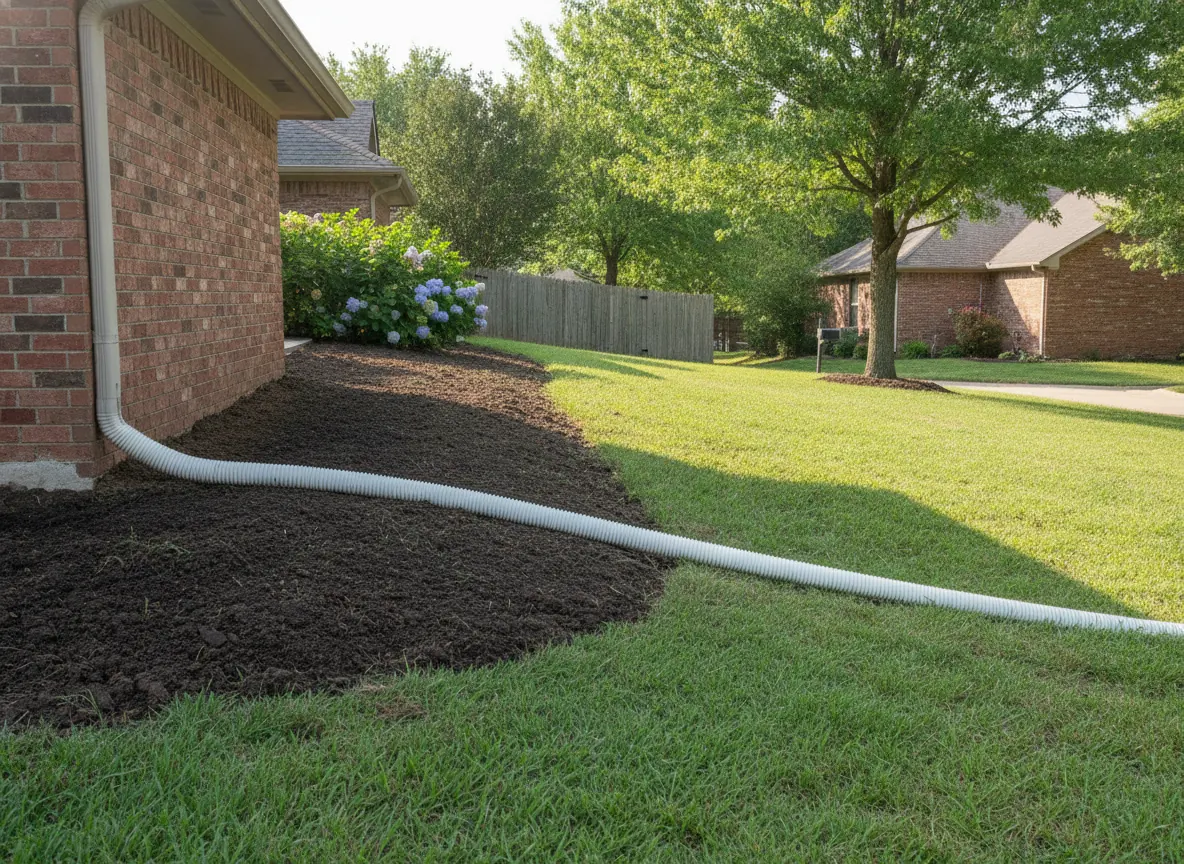
- Extend downspouts so water lands several feet from the foundation.
- Slope soil away from the walls and fill low spots where water ponds.
- Keep gutters clear so they do not overflow onto the wall line.
- Watch for new or widening cracks and date photos of them.
- Note doors and windows that start sticking, and whether it changes by season.
The drainage and grading page covers what local companies typically do here. If you already see a bowing wall, a horizontal crack or sloping floors, start with the bowing basement wall repair or house leveling and piers pages, and get an independent structural engineer's assessment before a large job. Typical national price ranges are on the foundation repair cost page.
Common questions
Is Topeka built on expansive clay?
Much of Shawnee County is. About 46% of the county is mapped in clay soils with high or very high shrink-swell potential (USDA NRCS soil data), mainly Martin and Pawnee soils. Kansas River bottom soils swell little. Soil can change from one lot to the next, so check your own lot on Web Soil Survey.
How do I find out what soil is under my house?
Use the USDA's free Web Soil Survey: find your address, draw a box around the lot and look up the soil map units and their shrink-swell rating. It shows mapped soils, not what is directly under your footings. For a large repair, an engineer can say whether a soil report is worth ordering.
Does expansive clay mean my foundation will fail?
No. Many homes on clay soils perform well for decades. Clay movement can contribute to cracks, bowing walls or uneven floors, especially where water is poorly managed. Watching for changes and keeping water away from the walls are the practical first steps.
What helps most on clay soil?
Keeping soil moisture steady near the house. Extend downspouts, slope soil away from the walls and fix low spots where water ponds. These are usually the lowest-cost steps, and they also help any structural repair do its job.
Get quotes from local companies
Topeka Foundation Experts is a free quote service, not a contractor. Describe what you are seeing once and independent foundation repair, basement wall and waterproofing companies serving Topeka, KS and northeast Kansas can reply with quotes. Companies may pay to receive requests, and there is no obligation to hire anyone. Request free quotes or call (785) 502-9116.