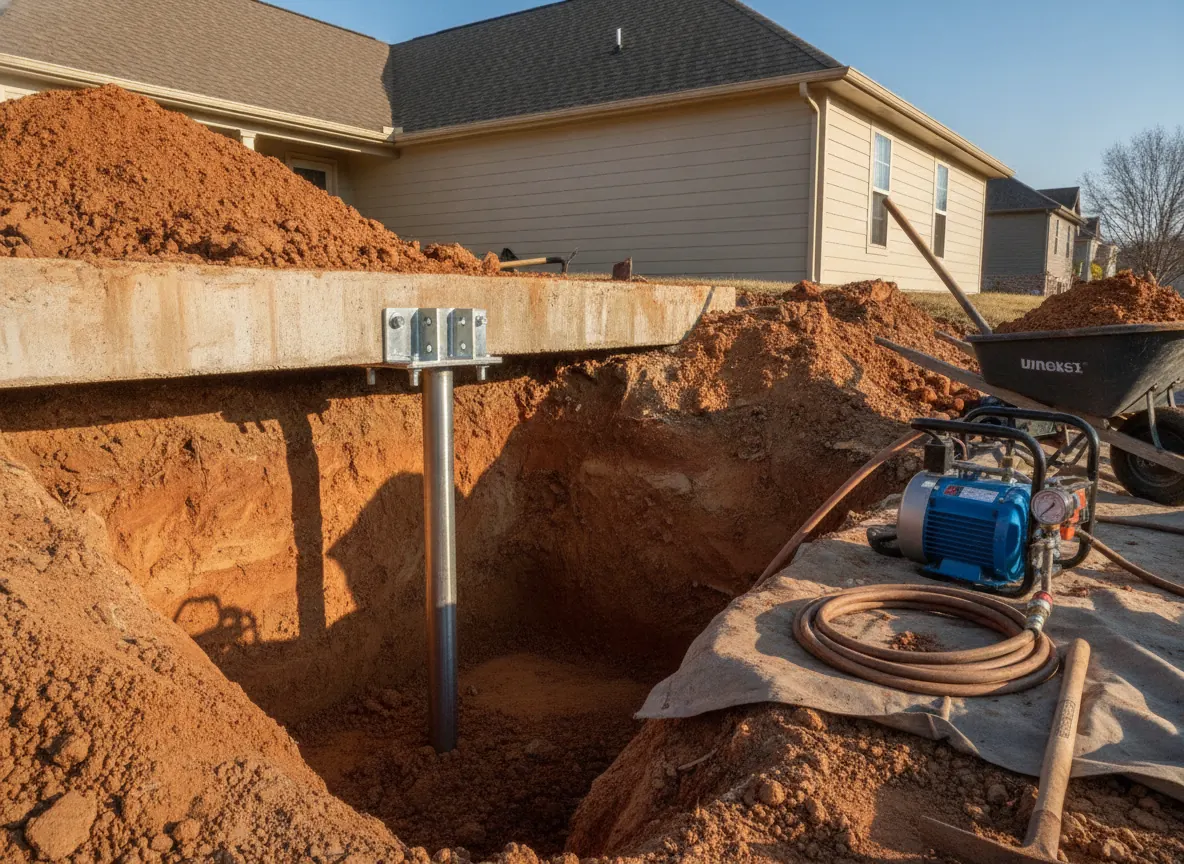
Why homes settle around Topeka, KS
Settlement starts with soil. About 46% of Shawnee County is mapped in clay soils with high or very high shrink-swell potential (USDA NRCS soil data), mainly Martin and Pawnee soils. Clay like that shrinks in a dry spell and swells when wet, and a footing can drop where it loses support. Shawnee County peaked at D2 (severe) drought, 93.5% of the county, on October 17, 2023. Check your own lot on Web Soil Survey; conditions vary block to block.
Kansas River bottom soils are different. They swell little, and flooding and a high water table are the bigger concern there, which can change what kind of pier and how deep a company recommends.
Topeka's code sets footings at least 36 inches deep, and Topeka's housing skews older: a 1967 median year built and 68% built before 1980 (ACS 2020–2024). Older homes may have had additions, porches or garages built on shallower footings than the main house, and those joints are common places for settlement to show. Water from short downspouts often makes things worse; see drainage and grading.